ADP-Glo™ Kinase Assay


One Assay for All Your Kinase Screening Needs
- Measures ADP produced by a kinase reaction, so signal falls when kinase activity is inhibited
- Sensitive and well suited for low-activity kinases and low-conversion (low ATP-to-ADP) conditions
- Suitable for use with almost any kinase
- Stable luminescent signal enables batch processing
- Ideal for use with Kinase Enzyme Systems to study activity across the human kinome
Catalog Number:
Size
Catalog Number: V6930
Catalog Number: V9101
Catalog Number: V9102
Catalog Number: V9103
Catalog Number: V9104
A Luminescent ADP Detection System for Kinases and Other ADP-Generating Enzymes
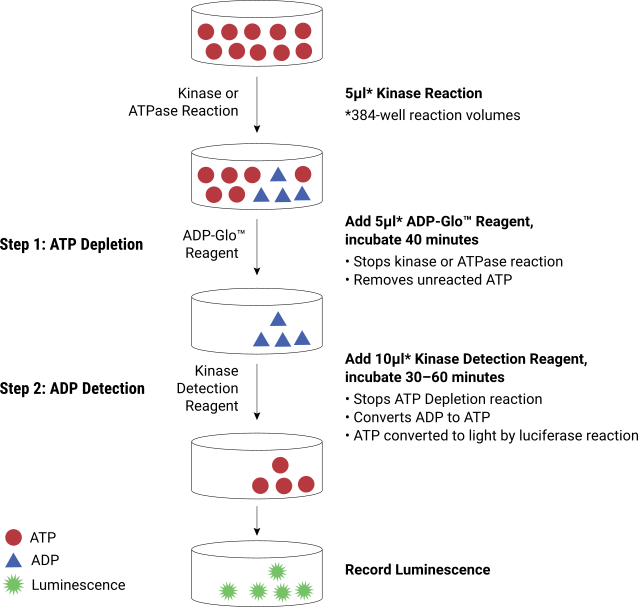
The ADP-Glo™ Kinase Assay measures ADP formed from a kinase reaction. The ADP is converted into ATP, which is used to generate light in a luciferase reaction. The luminescence generated correlates with kinase activity.
The assay is well suited for measuring the effects of chemical compounds on the activity of many purified kinases, making it ideal for primary screening as well as kinase selectivity profiling. Z′-factors >0.7 are routinely obtained. The stable luminescent signal allows batch plate processing without the need for strictly timed incubations.
How Does the ADP-Glo™ Kinase Assay Convert ADP into a Luminescent Signal?
The assay works in two steps. First, the ADP-Glo™ Reagent depletes any ATP remaining after the kinase reaction. Then the Kinase Detection Reagent converts the ADP produced by the kinase back into ATP, which Ultra-Glo™ Luciferase converts into light—so luminescence Is directly proportional to kinase activity.
Why is the ADP-Glo™ Kinase Assay better suited for weak kinases or low ATP turnover?
The assay directly detects the ADP product, rather than the depleted ATP substrate, so it retains a strong, measurable signal even when only a small fraction of ATP is converted. This makes it well suited to low-activity kinases, such as growth factor receptor tyrosine kinases, where ATP depletion alone would be too low to detect reliably.
ADP-Glo™ vs Kinase-Glo® Assays: Which Should You Use?
Choose the ADP-Glo™ Assay for low-activity kinases, high-Km ATP conditions or when maximum sensitivity matters—it measures ADP produced, so signal falls with inhibition. Choose Kinase-Glo® Assays for a simpler, single-reagent-addition workflow measuring ATP remaining, where signal rises with inhibition and ATP depletion is substantial.
| Feature | ADP-Glo™ Kinase Assay | Kinase-Glo® Luminescent Kinase Assays |
|---|---|---|
| What it measures | ADP produced by the kinase reaction | ATP remaining after the kinase reaction |
| Signal direction on inhibition | Signal falls when kinase activity is inhibited | Signal rises when kinase activity is inhibited |
| Detection chemistry | Two-step: deplete residual ATP, then convert ADP to ATP and detect via Ultra-Glo™ Luciferase | Single step: residual ATP detected directly via luciferase/luciferin reaction |
| Sensitivity/best fit | Higher sensitivity for low-activity kinases and low ATP-to-ADP conversion; tolerates ATP up to 1mM. The ADP-Glo™ Max Assay is available for ATP concentrations up to 5mM. | Simpler workflow; most informative when ATP depletion is substantial and ATP demand is moderate (up to 500µM). |
| Workflow complexity | Two reagent additions | Single reagent addition |
Detects Activity of a Range of Kinases
The ADP-Glo™ Kinase assay has a high dynamic range and produces a strong signal at low ATP-to-ADP conversion, making it well suited for screening low-activity kinases such as growth factor receptor tyrosine kinases. The assay can be used at ATP concentrations up to 1mM, important for kinases with high Km values for ATP.
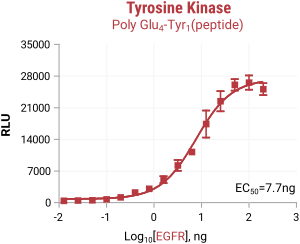
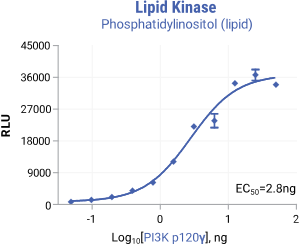
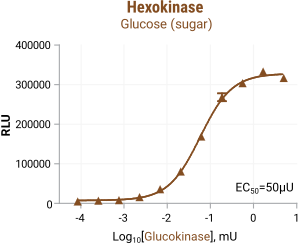
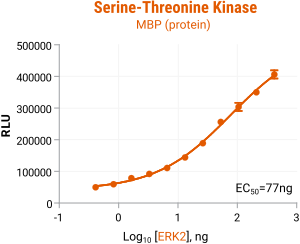
Use ADP-Glo™ Kinase Assay with Kinase Enzyme Systems to Simplify and Speed Kinase Profiling
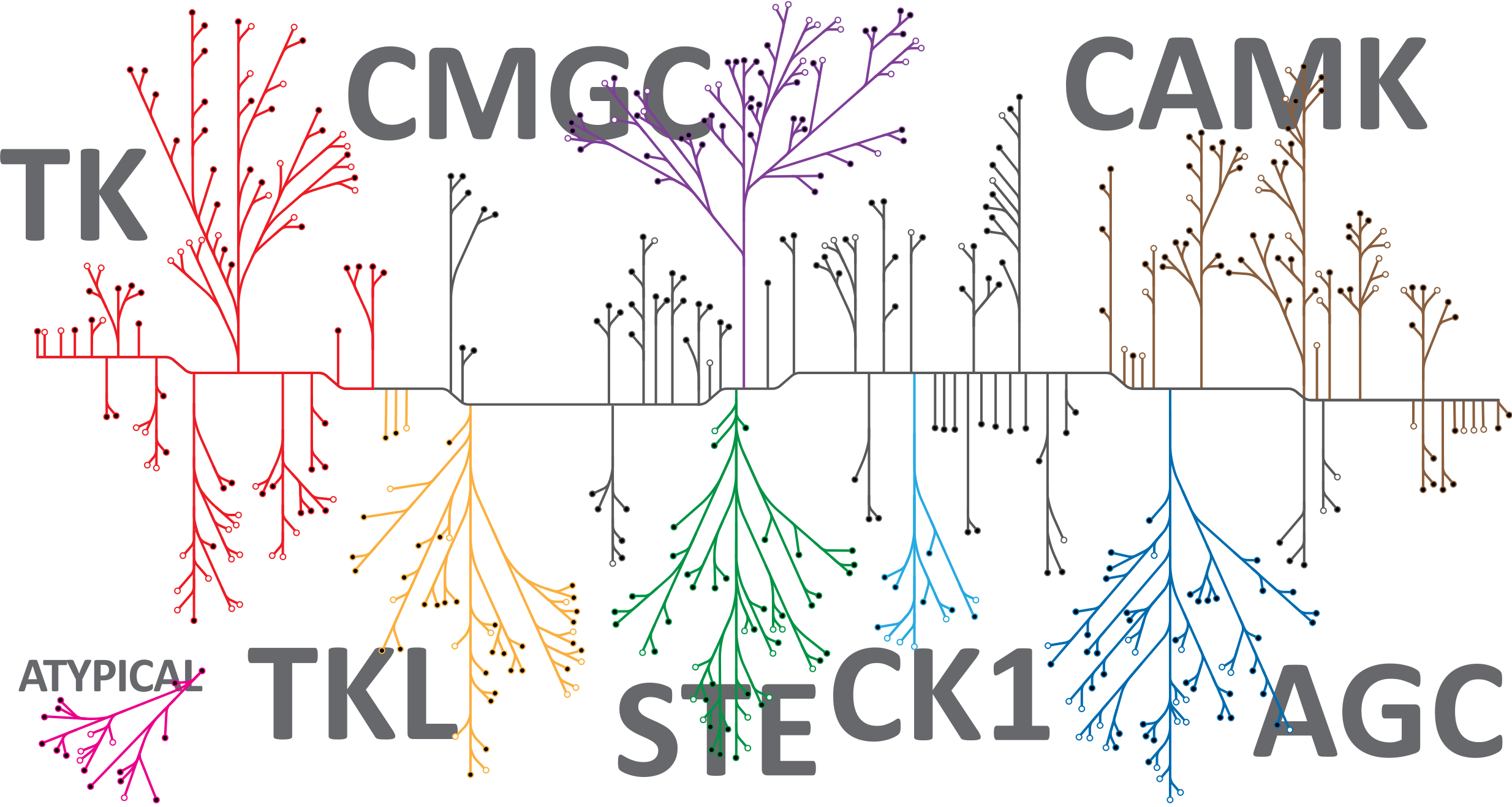
Each Kinase Enzyme System provides an individual kinase, substrate, and reaction buffer with optional ADP-Glo™ reagents. Kinase enzyme systems span the breadth of the human kinome; assays for quantifying the activity of over 170 kinases are available.
Promega lipid kinase enzymes, substrates and detection systems provide a complete set of reagents for performing phosphoinositide lipid kinase (PIK) reactions using a luminescent ADP-detection platform, the ADP-Glo™ Kinase Assay. The reagents include purified human recombinant proteins of Class I PI3Ks, optimized reaction buffer and ready-to-use lipid kinase substrates.
| Lipid Kinase Assays | Cat.# |
|---|---|
| ADP-Glo™ Kinase Assay with Lipid Kinase Substrates | V1781, V1791 |
| PI3K Lipid Kinases | V1731 |
Kinase profiling is crucial for developing targeted kinase inhibitors. The ADP-Glo™ Assay, used with the Kinase Enzyme Systems or Lipid Kinase Assay Reagents, provides a convenient, simple method for profiling the effect of lead compounds on kinase activity.
Protocols
Complete Protocol
Quick Protocols
Frequently Asked Questions
What does the ADP-Glo™ Assay measure—ADP produced or ATP remaining?
The ADP-Glo™ Assay measures the ADP produced by a kinase reaction, not the ATP that remains. After the kinase reaction, the ADP-Glo™ Reagent depletes leftover ATP, then the Kinase Detection Reagent converts the ADP back into ATP and generates a luminescent signal—so higher kinase activity produces more ADP and more light.
Does the ADP-Glo™ Assay work for all kinases?
The assay is designed to work with virtually any purified kinase, including serine/threonine, tyrosine and lipid kinases, because it detects ADP rather than a kinase-specific substrate modification. Promega also offers Kinase Enzyme Systems covering over 360 individual kinases and Lipid Kinase Assay Reagents for phosphoinositide kinases, built on the same ADP-Glo™ chemistry.
What is the Kinase-Glo® assay principle, and how does it differ from the ADP-Glo™ Assay?
The Kinase-Glo® Assay measures the ATP that remains after a kinase reaction: as kinase activity consumes ATP, luminescent signal falls, so inhibitors cause the signal to rise. The ADP-Glo™ Assay instead measures the ADP produced by the reaction, so its signal falls when kinase activity is inhibited—the opposite direction, using the same luciferase chemistry.
Can ADP-Glo™ be automated for 384- or 1536-well HTS?
Yes. The ADP-Glo™ Assay uses a homogeneous, no-wash biochemical reagent with a stable, non-decaying luminescent signal, so plates can be processed in batches without strictly timed reads—ideally suited to 384- and 1536-well HTS automation. See the Automation of ADP-Glo™ Universal Kinase Assay poster for a validated HTS workflow.
What causes false positives in luminescent kinase assays?
The most common cause is a compound interfering with the luciferase/luciferin detection chemistry itself rather than the kinase—for example, a compound that inhibits Ultra-Glo™ Luciferase can look like a kinase inhibitor. Running a luciferase-interference control, or confirming hits with an orthogonal assay format, helps distinguish true kinase inhibition from detection artifacts.
How do kinase selectivity profiling panels differ from biochemical activity assays?
Activity-based assays, like ADP-Glo™-based Kinase Enzyme Systems, directly measure catalytic turnover. Binding-based panels, such as Eurofins Discovery’s KINOMEscan® platform, measure compound-kinase binding affinity without ATP and don’t reflect catalytic activity. Radiometric activity panels, like Reaction Biology’s HotSpot™ assay, directly measure phosphate transfer across large kinome panels. Each answers a different question.
Why does detecting the reaction product (ADP) improve sensitivity compared to detecting substrate depletion (ATP)?
When kinase activity is low, only a small fraction of ATP converts to ADP—a small dip in a large ATP pool is hard to measure precisely. Detecting the ADP formed instead measures a small quantity against a near-zero background, giving ADP-Glo™ a stronger signal-to-noise ratio for low-activity kinases and low-conversion conditions.
How does ATP concentration affect ADP-Glo™ versus Kinase-Glo® Assay results?
The ADP-Glo™ Assay tolerates ATP concentrations up to 1mM (up to 5mM for ADP-Glo™ Max Assay), which matters for kinases with high Km values that need higher substrate concentrations to reach saturating conditions. The Kinase-Glo® Assay, which measures ATP depletion directly, becomes less sensitive at high starting ATP concentrations, since the fractional change is harder to resolve against a large background. The Kinase-Glo® Max Assay is linear up to 500µM ATP, making it well suited for use with kinases with high Km for ATP, as well as for screening for kinase inhibitors that do not compete at the ATP binding site.
What’s the difference between ADP-Glo™ Kinase Assay and ADP-Glo™ Max Assay?
Both assays use the same two-step ADP-detection chemistry. ADP-Glo™ Max Assay tolerates ATP concentrations up to 5mM (versus 1mM for the Kinase Assay) and is positioned for ATPases as well as kinases, including low-activity ATPases such as membrane transporters and helicases. Choose ADP-Glo™ Max when your target needs higher ATP or isn’t a kinase.
Which assay should I use for primary screening versus kinome-wide selectivity profiling?
For primary screening or mechanism-of-action work on kinases you already have in hand, ADP-Glo™ or Kinase-Glo® biochemical assays are fast and cost-effective. For kinome-wide selectivity profiling across hundreds of kinases using cell-based NanoBRET® Target Engagement technology, consider our Tailored R&D Solutions compound profiling and screening services.
Specifications
Catalog Number:
What's in the box?
| Item | Part # | Size |
|---|---|---|
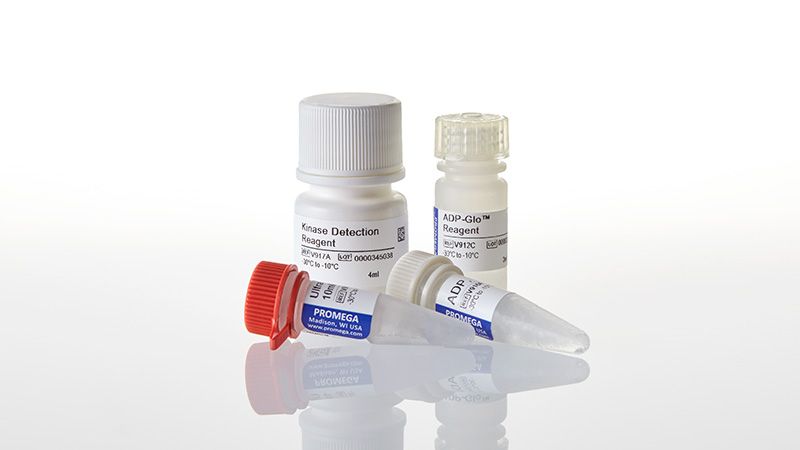
ADP-Glo™ Reagent |
V912C | 1 × 2ml |
|
Ultra Pure ATP, 10mM |
V915A | 1 × 500μl |
|
ADP, 10mM |
V916A | 1 × 500μl |
Kinase Detection Reagent |
V917A | 1 × 4ml |
SDS
Search for SDSCertificate of Analysis
Use Restrictions
For Research Use Only. Not for Use in Diagnostic Procedures.Storage Conditions
U.S. Pat. No. 7,700,310 and other patents and patents pending.
U.S. Pat. No. 8,183,007 and other patents and patents pending.
What's in the box?
| Item | Part # | Size |
|---|---|---|
|
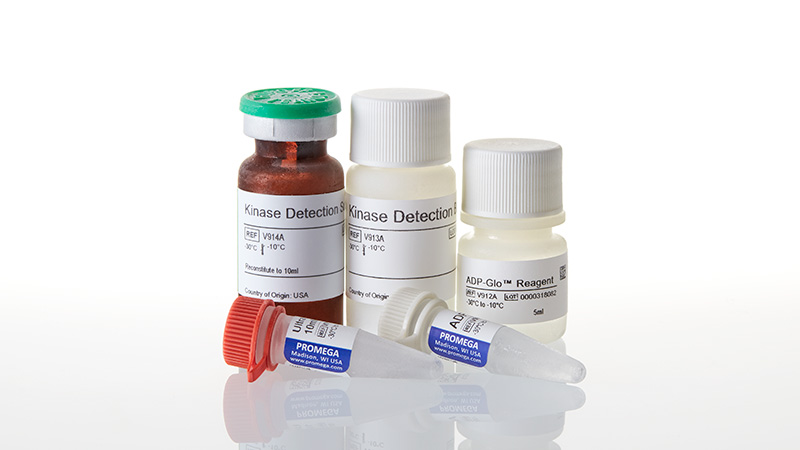
ADP-Glo™ Reagent |
V912A | 1 × 5ml |
|
Kinase Detection Buffer |
V913A | 1 × 10ml |
|
Kinase Detection Substrate |
V914A | 1 × 1 each |
|
Ultra Pure ATP, 10mM |
V915A | 1 × 500μl |
|
ADP, 10mM |
V916A | 1 × 500μl |
SDS
Search for SDSCertificate of Analysis
Use Restrictions
For Research Use Only. Not for Use in Diagnostic Procedures.Storage Conditions
U.S. Pat. No. 7,700,310 and other patents and patents pending.
U.S. Pat. No. 8,183,007 and other patents and patents pending.
What's in the box?
| Item | Part # | Size |
|---|---|---|
|
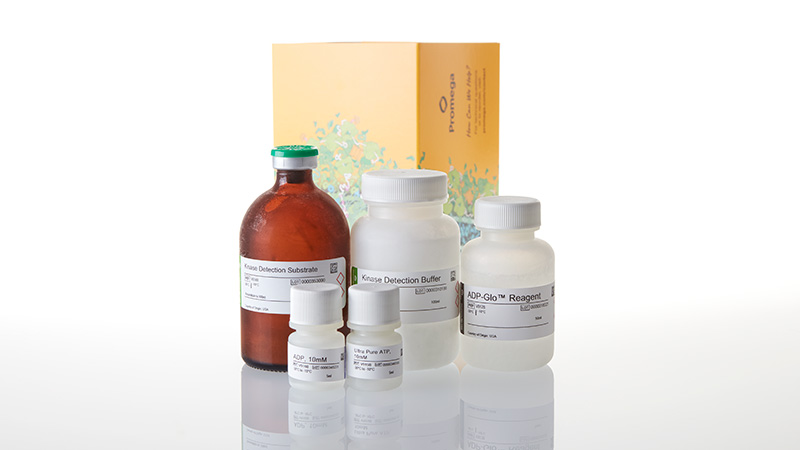
ADP-Glo™ Reagent |
V912B | 1 × 50ml |
|
Kinase Detection Buffer |
V913B | 1 × 100ml |
|
Kinase Detection Substrate |
V914B | 1 × 1 each |
|
Ultra Pure ATP, 10mM |
V915B | 1 × 5ml |
|
ADP, 10mM |
V916B | 1 × 5ml |
SDS
Search for SDSCertificate of Analysis
Use Restrictions
For Research Use Only. Not for Use in Diagnostic Procedures.Storage Conditions
U.S. Pat. No. 7,700,310 and other patents and patents pending.
U.S. Pat. No. 8,183,007 and other patents and patents pending.
What's in the box?
| Item | Part # | Size |
|---|---|---|
|
ADP-Glo™ Kinase Assay |
V9102 | 10 × 10,000 assays |
SDS
Search for SDSCertificate of Analysis
Use Restrictions
For Research Use Only. Not for Use in Diagnostic Procedures.Storage Conditions
U.S. Pat. No. 7,700,310 and other patents and patents pending.
U.S. Pat. No. 8,183,007 and other patents and patents pending.
What's in the box?
| Item | Part # | Size |
|---|---|---|
|
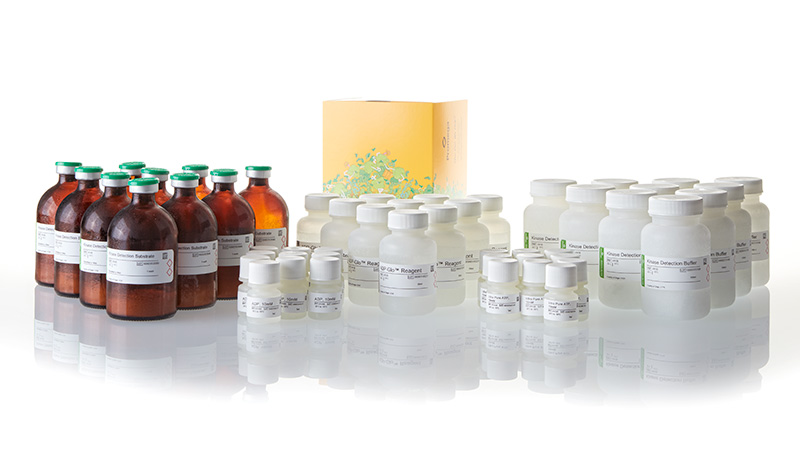
ADP-Glo™ Reagent |
V912B | 10 × 50ml |
|
Kinase Detection Buffer |
V913B | 10 × 100ml |
|
Kinase Detection Substrate |
V914B | 10 × 1 each |
|
Ultra Pure ATP, 10mM |
V915B | 10 × 5ml |
|
ADP, 10mM |
V916B | 10 × 5ml |
SDS
Search for SDSCertificate of Analysis
Use Restrictions
For Research Use Only. Not for Use in Diagnostic Procedures.Storage Conditions
U.S. Pat. No. 7,700,310 and other patents and patents pending.
U.S. Pat. No. 8,183,007 and other patents and patents pending.
Resources
Articles
Posters
Other Resources
Related Products
Similar Products
Frequently Used With
Product Citations
Recent publications that mention the use of this product.